The Department of General Services Surplus Land Process and Policy for the Sonoma Developmental Center

January 20, 2015:

The Department of General Services (DGS) Real Estate Services Asset Enhancement Section 

The following describes the step-by-step process of how State-owned land is determined to be surplus and then dispensed:

  1. The State owns all state-owned land; however different agencies have control over lands and account for them in their respective budgets. In the case of the Sonoma Developmental Center (SDC), the agency is the Department of Developmental Services (DDS).
  2. Every year, state agencies must report to DGS on all state-owned land they operate, and identify it as being “fully utilized,” “partially utilized,” or “excess.”
  3. If an agency identifies property/land to be excess, it means that it is no longer efficient or financially sound for the agency to keep it in their budgets.
  4. DGS then takes over, where they send a report to the state legislature each year listing excess properties. They need legislative approval to officially “surplus” state property. This happens in January/February of each year and always takes a year at least to get from being listed as excess to being approved for dispensation by legislature.
  5. Once DGS has approval, they must consult local government about any property that will be dispensed. Local government could mean the city, county, special districts, etc. Local government has the first opportunity to take over the property. If they so wish to use if for a governmental purpose, a park and/or open space, or affordable housing, it will be transferred to them. It must stay in their ownership and they must have a thorough and detailed management plan.
  6. If there is no local government interest in the land, and the property has the potential to be very valuable as urban infill, DGS will negotiate with city/county development agencies about how the property should be zoned. The state is always looking to make the absolute most money out of the situation, so they’ll be pushing for subdivisions or whatever type of zoning will yield the highest purchase price. It is at this point that the county has some pullIf the Board of Supervisors decides that this excess land should be kept as open space, and want to severely limit the development potential, DGS will not go out of their way to fight it, which is not worth the time or expense. They’ll just go ahead and accept the local decision in most cases. 
  7. Once development potential has been determined, DGS puts the property up for sale and sells to the highest bidder.

By looking up SDC on the Statewide Property Inventory, it can be determined that the agency controlling the Center is the Department of Developmental Services, a division of Health and Human Services that deals with people living with developmental disabilities. They would be the ones letting DGS know each year how “utilized” the property is.

Private individuals may contact the controlling agencies to see if any property may one day be listed as “excess.”

Governing Law:  Government Code Sections 54220-54232.

Announcement courtesy of Bob McKinnon, Assistant Chief.

Governor Proposes Continued Funding for SDC in 2015-2016 State Budget

January 13, 2015:

Governor Proposes Continued Funding for SDC in 2015-2016 State Budget to Cover Program Improvements

On January 9th, Governor Brown released his Draft 2015-2016 State Budget. In a published Budget Summary, the following information is provided about what we can expect for funding allocations for developmental centers in general, and for SDC in particular:

Department of Developmental Services

The Department of Developmental Services (DDS) provides consumers with developmental disabilities a variety of services and supports that allow them to live and work independently or in supported environments. California is the only state providing developmental services as an individual entitlement. DDS serves approximately 288,000 individuals with developmental disabilities in the community and 1,100 individuals in state‑operated developmental centers (DCs). For 2015‑16, the Budget includes $5.7 billion ($3.3 billion General Fund) for support of the Department.

Certification Issues

  • The Budget includes $21.4 million ($11.6 million General Fund) and 179.5 positions for costs related to the ongoing implementation of Program Improvement Plans at the Sonoma, Fairview, and Porterville Developmental Centers.
  • The federal government, through the state Department of Public Health, has determined that certain units at the Sonoma Developmental Center are non-compliant with federal licensing and certification requirements and should be decertified, thereby becoming ineligible for federal funding. This ruling is being appealed, but if the appeal is not successful the state will have to back-fill approximately $33 million in lost federal funds in 2014‑15, growing to $43 million in 2015‑16. In addition, the Porterville and Fairview Developmental Centers are implementing federally required Program Improvement Plans to maintain annual eligibility for approximately $50 million in federal funds.

For more detailed information, see the January 2015 Department of Developmental Services Governor’s Budget Highlights.

Introducing the ‘Transform SDC’ Project

January 13, 2015:

In January 2014, the State of California announced plans to “fundamentally transform” the remaining state-operated development centers in California. What was once a network of 21 centers housing over 13,400 residents with developmental and intellectual disabilities has been reduced to four facilities with 1,335 clients. The Sonoma Developmental Center (SDC) is the largest of the remaining facilities, and it is recognized as a critical economic, social and environmental resource for Sonoma County.

This blog site is for everyone who cares about the Sonoma Developmental Center. The Sonoma Land Trust is hosting this site and, in partnership with the County of Sonoma, the Parent Hospital Association, the Sonoma Ecology Center and the other members of the SDC Coalition, we are committed to building public awareness and creating tools for dialogue, learning and activism.

We don’t know what the future holds for SDC. The State of California owns and operates the property and they have not indicated what “transformation” of it will entail. Will the State propose closure of the Center? Will they propose sale of the property? Or can we develop a plan that will retain vital health care services, protect the site’s rich natural resource values and preserve the 1,000+ jobs for the dedicated health care professionals who currently work at SDC?

We believe that an informed and engaged citizenry can make a fundamental difference in the governmental decision-making process. That’s the history of Sonoma County. We like to compare SDC to San Francisco’s Presidio. In the months to come, we will be sponsoring a community dialogue to create a common vision and set of proposed uses for the SDC. You can follow our progress on this blog site and sign up for our eNews as well. We appreciate your interest and invite you to leave comments on this blog site and to share in our work to preserve this precious resource of Sonoma County.

John's Blog photo

Article by John McCaull, Land Acquisition Project Manager at the Sonoma Land Trust.

Protecting the Land and the People of Sonoma Developmental Center

January 1, 2015:

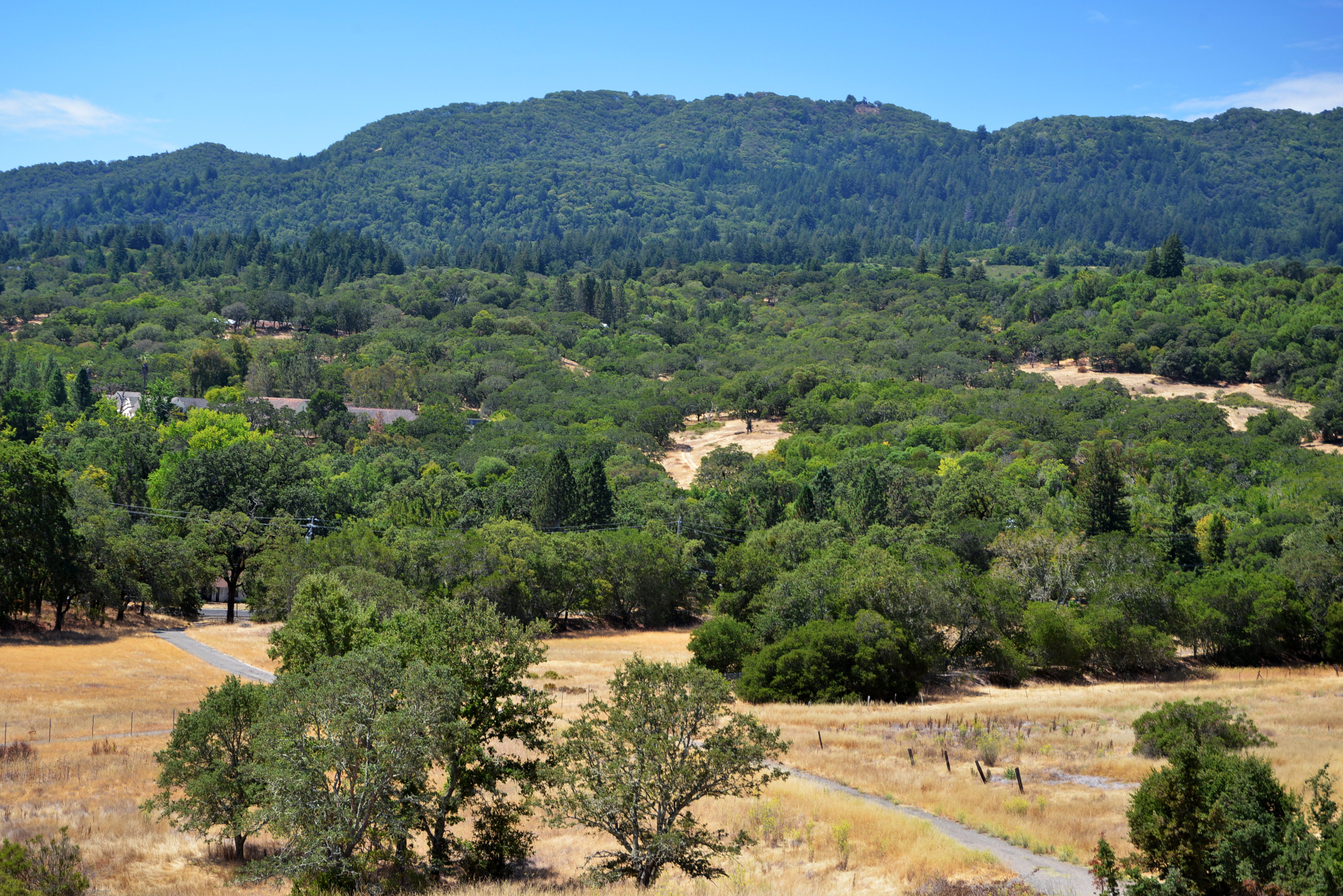
Located in the “pinch-point” of the Sonoma Valley Wildlife Corridor, nearly 800 of the Sonoma Developmental Center’s 1,000 acres are undeveloped and wild, making it critical habitat for wider-ranging mammals, like mountain lion, deer, bobcat, bear, and coyote. This is why Sonoma Land Trust is a leading partner of the effort to develop a community-centered plan for SDC.

The Sonoma Land Trust Fall Newsletter

Keeping the Sonoma Valley Wildlife Corridor Open and Wildlife Friendly

January 1, 2015:

The Sonoma Land Trust is working with landowners in the Sonoma Valley to ensure that wild animals can move safely between Sonoma Mountain and the Mayacmas Mountains.

Please click on the link below to read our article on how we’re helping to keep the Sonoma Valley Wildlife Corridor open and wildlife friendly.

Keeping the Sonoma Valley Wildlife Corridor open and wildlife friendly